Monday, July 1, 2019

July 2019 Conscious Movie-of-the-Month


The Conscious Movie-of-the-Month for July 2019 is Avatar (2009).

During the month of July you are invited to watch the movie Avatar on your own. If you have already seen it, we recommend watching it again with the intent of seeing any patterns of consciousness you had not seen before, including the patterns mentioned below. If you do not own a copy, you can stream it online or get a free rental from your local library. You are also invited to share your thoughts, reflections and musings about the movie in our group's online discussion forum.

At the end of the month, we will have a video conference call where we will explore the movie from a conscious, integral and transpersonal perspective, and you will have the opportunity to share more of your personal reflections and ask any questions.

Recommended by one of the members of our group, Avatar feels like a perfect follow up to our exploration last month of What the Bleep in many ways, including that both these movies were able to tap into the zeitgeist, both explored transformations of consciousness and its relationship to physical reality in their own unique way, and both were created on the cusp of an evolution in film technology. Exploring Avatar after What the Bleep is also a great way for us to get into the difference between tapping into a certain cultural stream (What the Bleep) and tapping into the full collective field (Avatar).

On its own, Avatar is also the perfect film for us to explore how to integrate multiple structures of consciousness in a moving image work, which it does masterfully. It also gives us the opportunity to explore how and why this pattern appears in the most financially successful films of all times and how this approach can enable us to potentially affect more hearts and minds. Plus, even though Avatar was released during the Christmas season...it is also makes a pretty good summer movie adventure.

Monday, June 24, 2019

“What the Bleep Do We Know” about Tapping into the Zeitgeist?

What the Bleep Do We Know (2004)

Exploring What the Bleep Do We Know (2004) as this month’s Conscious Movie-of-the-Month selection has made clear that one of the major hallmarks of this work is that it somehow tapped into the zeitgeist, or the spirit of the times. The historical data suggests that a media works’ potential to achieve financial success or major transformative impact is directly related to its relationship to the zeitgeist, or collective field at the time of its release. Even traditional entertainment industry watchers have recognized this issue, as reflected in this Hollywood Reporter article from 2015. This is a wonderful insight, to be sure, but it begs a larger question: Is it possible to create a media work with the intention of connecting with the zeitgeist? Or is this too subtle and complex a connection for us to work with on a conscious and direct level?

Using What the Bleep as a case study I think is valuable for helping us examine this question. What we have learned from the filmmakers William Arntz and Betsy Chasse, and one of the distributors of the film, Ron Laurie, during this month was that they were conscious of it happening on some level at some point during the creation process, and they attempted to ride the wave the best they could in each of their own ways and as a team. Exploring their distribution efforts, we see an example of using an integral approach to consciously tap into the zeitgeist wave and maximize the ride…which they did successfully.

I have been researching this potential to consciously tap into the zeitgeist, or as we say in Integral Theory, tapping into the “evolutionary impulse,” or the driving force of the evolving universe. From this perspective the zeitgeist can be seen as the current collective field within the evolutionary stream of a culture and society. The key to tapping into it is to become conscious of the evolutionary arc behind this wave. Becoming conscious of the evolutionary arc that has led to any given moment in the life of an individual or the collective has the potential to give us the capacity to sense the energy of trajectory of this collective wave, and in turn the evolutionary impulse behind it. While this is a very complex and subtle process our research suggests it is indeed possible to consciously tap into the zeitgeist and evolutionary impulse, and thus increase our chances of both audience reach and transformative impact.

To learn more about this process and how you can ride the zeitgeist wave yourself, be sure to join Trina Wyatt, myself and special guest, What the Bleep co-creator, Betsy Chasse for our live virtual chat on Wednesday June 26th at 6 pm PST.

Monday, June 3, 2019

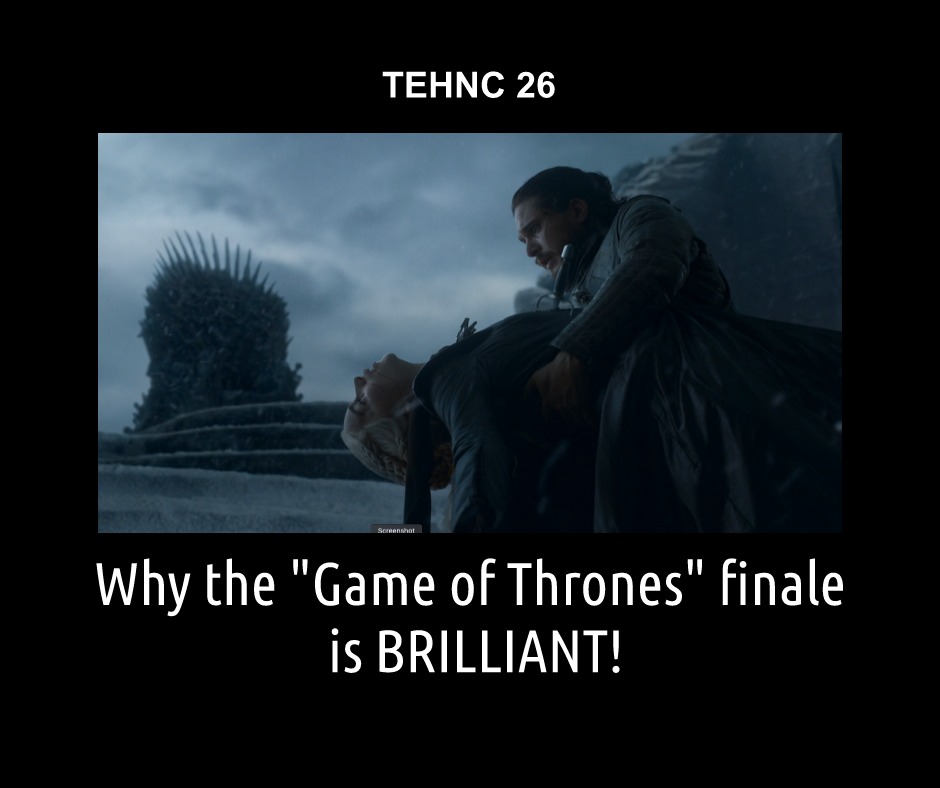
Why the "Game of Thrones" finale is BRILLIANT!


Join Integral Cinema Project's lead researcher Mark Allan Kaplan and associate researcher Jonathan Steigman as they make the case in this new podcast for Why the Game of Thrones finale is BRILLIANT! While they are definitely in the minority with this one they explore how the finale managed several extraordinary moves that deepened and anchored the entire series. With the finale, the whole arc and purpose of Game of Thrones became clear. The show is about the transition away from the Mythic/Traditional structure of consciousness and the end of feudalism...and the rise and fall of an authoritarian demagogue with weapons of mass destruction...leading to rumblings of the Rational/Modern structure and the transition toward democracy.

Mark and Jonathan also make the case that part of the disappointment in the finale may be because of how the last 2 seasons were truncated, moving to an archetypal storytelling style that sometimes clashed with the previous 6 seasons.


Why the Game of Thrones finale is BRILLIANT! (TEHNC 26) from TEHNC Podcast on Vimeo.


Saturday, June 1, 2019

Inside “What the Bleep Do We Know” - A Special Conscious Movie-of-the-Month Experience for June 2019


Our Conscious Movie-of-the-Month exploration for June 2019 is What the Bleep Do We Know (2004). This month we have a special treat for all us conscious media creators and fans, one of the filmmakers who worked on the film, our very own Betsy Chasse, will be joining us in our exploration along with some potential surprise guests from the production team, sharing some of their behind the scenes experiences and perspectives on the film with us both online during the month and in our virtual chat at the end of the month (date and time to be announced).

You are invited to watch What the Bleep Do We Know on your own and feel free to share your thoughts, reflections, musings and questions about the film in our group’s online discussion forum.

We chose What the Bleep Do We Know because it is considered by many to be a landmark work in the conscious media movement, being one of the very first movies about consciousness to penetrate the mass market. It was also groundbreaking in terms of visually capturing patterns of consciousness itself and creating what is now called the hybrid documentary style, integrating interviews with both compelling narrative and powerful visual storytelling.

This film was also created during the transition between analogue and digital filmmaking and was one of the first films to tap into the cultural creative field of consciousness. Because of this the film was traversing two major evolutionary convergence streams, technological and cultural, and is a great example of a work that was in synchronicity with the zeitgeist edge of the evolution of consciousness. We are blessed to have the opportunity to hear from the filmmakers themselves about what it was like to create a work at this leading edge, and while What the Bleep Do We Know is not an integral film, all of this makes it is a fascinating case study from an integral-evolutionary perspective.

Please join your hosts Trina Wyatt and Mark Allan Kaplan and our very special guests in this very special conscious movie adventure…

Thursday, May 23, 2019

Breaking the Wheel: Reflections on Game of Thrones, Selma and the Great Transition

Game of Thrones (2011-2019) Final Episode

For those of you who have been watching Game of Thrones, this is a special week...the week of the series finale. For many viewers, outsized expectations combined with mixed feelings about the final two seasons make it difficult to see the finale in a clear and deep way. Many viewers online are expressing disappointment at how the show finally turned out, while others have decidedly mixed feelings. Part of this may be due to the show’s need to wrap itself up before the book series on which it is based has even been completed. While author George R. R. Martin told the creators of the show how his saga will end, the show runners have had to create the meat around the foundational bones of the story themselves, and do it in a shorter span of time.

After a deep analysis of the series it appears that the GoT finale and the show as a whole stands as a brilliant work of integral cinema, integrating multiple dimensions of being and becoming. The series arc depicts the evolutionary transition away from the monarchy system and into the stirrings of representative democracy. Meanwhile, it lays bare the full arc of Daenerys’ rise as an authoritarian demagogue, strongly echoing the current political situation and evolutionary transition we are facing today.

For those of us who loved the movie Selma (2014) who are also fans of GoT, we can find some very fascinating parallels and differences between the transformations of consciousness explored in these two works. Selma is, of course, a story about a real-life event and GoT is a fictional representation of real-life processes and patterns. Both explore societal transitions, and both have resonances connected with the structures of consciousness that support prejudice, bigotry and slavery...and the struggle to transcend these structures. One explores the process of attempting to create a better world where violence is used (GoT) and the other, where non-violent civil disobedience is used (Selma).

Selma (2014)

The transition explored in GoT is about the shift from the traditional (mythic) to the modern (rational) structures of consciousness, where violence has been historically the most used transitional catalyst. Selma, on the other hand, explores part of the transition from the modern (rational) to the postmodern (pluralistic) structures of consciousness, where non-violence tends to be the most potent choice. Both of these methods relate to our current situation since the transition we are going through includes a conflict between the traditional (mythic), modern (rational) and postmodern (pluralistic) structures of consciousness, all at the same time.

In many ways, these types of transitions between different structures of consciousness and the cultural and social systems that have been built up around them requires one to “break the wheel” of the old system in order to make room for something new to emerge like in GoT…while there are also times when all we need do is try to fix the wheel like in Selma, there are also other times when it seems like the wheel of the old system breaks down by itself as it reaches these evolutionary transition points, like this moment we are all facing in our world today...and stories like these can help us see clearer and deeper and more expansively where we are and what we are called to evolve through and toward.

------------------

*Special thanks to Jonathan Steigman for his editorial assistance in creating this article and for his contributions to the research into the “Game of Thrones” series.

-------------------

Breaking the Wheel: Reflections on Game of Thrones, Selma and the Great Transition, Integral Cinematic Arts Journal, May 21, 2019. Available at: https://medium.com/integral-cinema/breaking-the-wheel-4fca74846a12


Wednesday, May 15, 2019

Healers in the Hood: Reflections on the Passing of John Singleton, "Selma" and the New Consciousness in African American Cinema


John Singleton at the Premiere of “Selma” (2014)

As part of the Conscious Movie-of-the-Month Club hosted by Conscious Good Creators Network, we are viewing the film Selma (2014) as our monthly selection. I was struck by the news of African American filmmaker John Singleton (1968–2019) passing away just a few days before we started. I noticed some synchronicities or resonances between our choice of film and the life, work and passing of Singleton. Selma is the work of African American filmmaker Ava DuVernay who is part of a whole new movement and consciousness within African American cinema that most likely would not exist without Singleton’s groundbreaking work.


--> Selma filmmaker Ava DuVernay pays tribute to John Singleton Twitter (2019)    
The history of African American cinema has been profoundly affected by the history of African Americans and their struggle against great individual, cultural, social and systemic injustices and challenges. The evolutionary journey of African American media artists and their works is like a creative mirror on our collective journey as a country. Because of this great injustice gap, the evolution of African American cinema is the story of many creative, cultural and social groundbreakers fighting against a system that was and still is in many ways rigged against people of color.

Every generation has had courageous individuals who sought to break some of these barriers and open the doors to those generations to come. John Singleton was one of the brave creative souls who raised and deepened the cinematic consciousness of African American cinema by unpacking the overt and covert effects of living within the shadows of racism. His breakout film Boyz n the Hood (1991), made when he was just 23, depicted the everyday lives and realities of African Americans, going deeply personal to tap into the universal.

Since his passing many African American film scholars, critics, historians and commentators have written about Singleton’s various contributions to African American cinema and American cinema in general, including: What Hollywood Owes to John Singleton, his Influence on African American Cinema, and how he Changed Black Culture on Film Forever.

My colleague Jonathan Steigman and I created a video podcast series called New Black Cinema for White People in which we take a deep dive into the new generation of masterful young filmmakers standing on the shoulders of John Singleton and other trailblazing African American media artists. One of the groundbreaking elements of the works by this new generation is their use of both subtle and extremely overt complex communication to pierce the veil of structural white supremacy. From broad satire to quiet drama, from big budget pop culture films to low budget independent works, these filmmakers are working at the top of their game and creating cinematic works designed to raise the consciousness of American culture and society to the hidden dimensions of racism and structural white supremacy. By exploring the personal and collective costs of the hidden dimensions of racism, these creators seek a way to transcend and heal them with love and compassion for all sides.

Ava DuVernay is one of this movement’s leaders, helping and mentoring others the way Singleton did. DuVernay and this group of the new wave in African American cinema are operating at an integral or near-integral structure of consciousness, integrating all the gifts from the previous generations of activists and artists. One of these gifts is the integration of Singleton’s collective through the personal stories approach with a higher, deeper and more expansive “big picture” perspective producing more complex and multi-layered storytelling.

In Selma, DuVernay unpacks the personal, interpersonal, cultural and social dimensions of Martin Luther King’s racial and social justice consciousness raising effort during the Selma-to-Montgomery voting rights marches in 1965. So we have a film about the consciousness raising efforts of Dr. King and others on the individual and collective front lines, made by a filmmaker who herself seeks to raise consciousness even further around these issues through her works. In this, DuVernay and her cohort in this new generation are standing on the shoulders of those who came before them, including Singleton, and pushing the dialogue ever forward.

And so, this month, we take this moment to mourn and honor the passing of one of these groundbreakers as we explore one of the cinematic works that has sprung from the creative garden he helped seed.

References


______________________


*Special thanks to Jonathan Steigman for his editorial assistance in creating this article and for his contributions to the research into this new movement in African American Cinema.

Wednesday, May 1, 2019

May 2019 Conscious Movie-of-the-Month


The Conscious Movie-of-the-Month for May 2019 is Selma (2014).


You are invited to watch Selma on your own and feel free to share your thoughts, reflections and musings about the movie in our group's online discussion forum.

At the end of the month, on Wednesday May 29th at 7:00pm Pacific Time we will have a video conference call where I will share my reflections on the movie from a conscious, integral and transpersonal perspective and you will have the opportunity to share more of your personal reflections and ask any questions.

If you have not already joined our free Conscious Movie-of-the-Month Group/Club, you can still join us anytime by signing up for a free membership at the Conscious Good Creators Network.

___________________________


In an effort to be "conscious" of diversity as we embark on our second conscious movie exploration, we are feeling called for us to explore Selma by African American woman filmmaker Ava DuVernay, an amazing work that cinematically explores Martin Luther King's effort to elevate American collective consciousness. Selma includes one of the best montages of awakening collective awareness ever created, and directly addresses Dr King's conscious effort to affect the evolution of consciousness on the individual and collective levels.

DuVernay is a pioneer in feminine approaches to cinematic expression, as well as developing a synergy of masculine and feminine approaches, and this film offers a great representation of her contribution to this dimension of the evolution of cinematic consciousness.

Selma is also a major work from the new consciousness-raising efforts of a group of young and talented African American filmmakers that DuVernay is part of as well as being a leader for this new movement in African American Cinema.

This film is also an important work for us conscious media creators to study during these profoundly challenging times, for it gives us a glimpse of the consciousness it takes to raise collective consciousness through media and direct-action combined. And for all us media consumers it can help us viscerally connect to the process of media expression from real life events through the lens of media and into our own conscious fields.

I will be sharing more on the film during the month here online and on our video conference call on the 29th and invite you to join the conversation.

Thank you for continuing to join us on this adventure...time to get our revolutionary spirits awakened, pop us some popcorn and dive into this cinematic blueprint for elevating consciousness on a grand scale...